
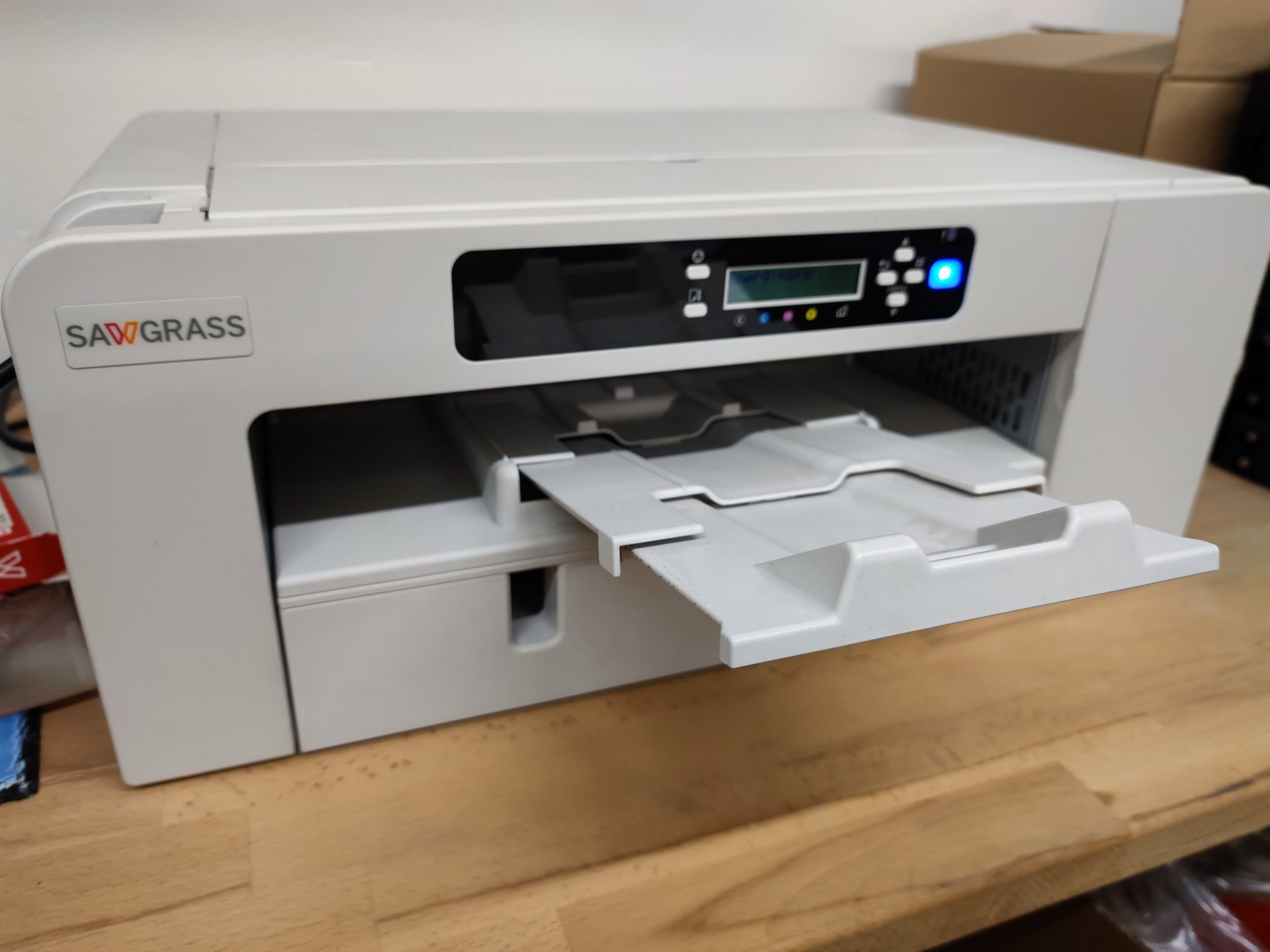
Under heat, sublimation dye changes directly from a solid into a gas and enters suitable polyester fibres or polymer coatings.
Why the print does not sit on the fabric
Artwork is first printed onto transfer paper. Heat drives the dye into the material, where it becomes fixed as it cools. No separate film or ink layer remains on the surface.
Suitable products
The process needs a high polyester content or a purpose-made coating and works best on white or light substrates.
- Light polyester sports shirts and performance clothing
- Teamwear with gradients and all-over designs
- Flags, fabric banners and selected decorative textiles
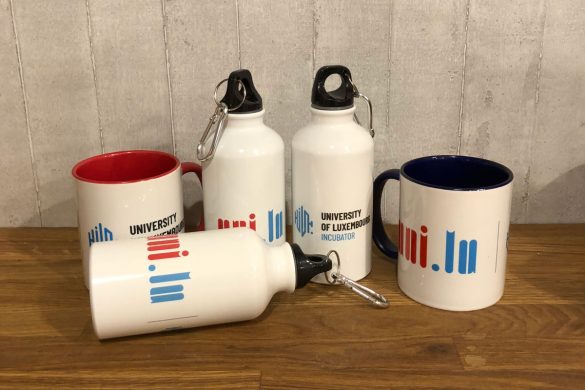
- Mugs and suitable coated photo products
- Short runs with changing full-colour artwork
Transfer and colour bonding
Colour profile, paper, temperature, time and pressure must be matched to the product.
- Check material and coating compatibility
- Site and colour-manage the artwork
- Print with sublimation dye onto transfer paper
- Transfer under controlled heat
- Inspect colour, sharpness and material
Frequently asked questions
Why should the garment be light?
Sublimation dye is transparent and does not print opaque white, so the base colour affects the artwork.
Can cotton be sublimated?
Not with the conventional process, because the dye needs suitable polyester or a polymer coating.
Can the print be felt?
On suitable polyester there is no added print layer because the dye enters the material.
Can dark garments be printed?
Conventional sublimation is not opaque on dark fabric. A different decoration process is required.
Check sublimation for your product
Send the product, material, artwork, quantity and size. We will check compatibility and expected colour output.