
A screen-print transfer separates printing from garment decoration: each colour is printed onto a paper or film carrier and the completed transfer is heat applied later.
How a screen-print transfer is made
A screen is prepared for every colour. Ink layers are registered accurately on the carrier, finished with a suitable adhesive system and dried. Heat pressing then bonds the transfer to the garment.
When the setup pays off
Screen preparation takes more work than digital transfer production, so the method is strongest for recurring artwork and planned runs.
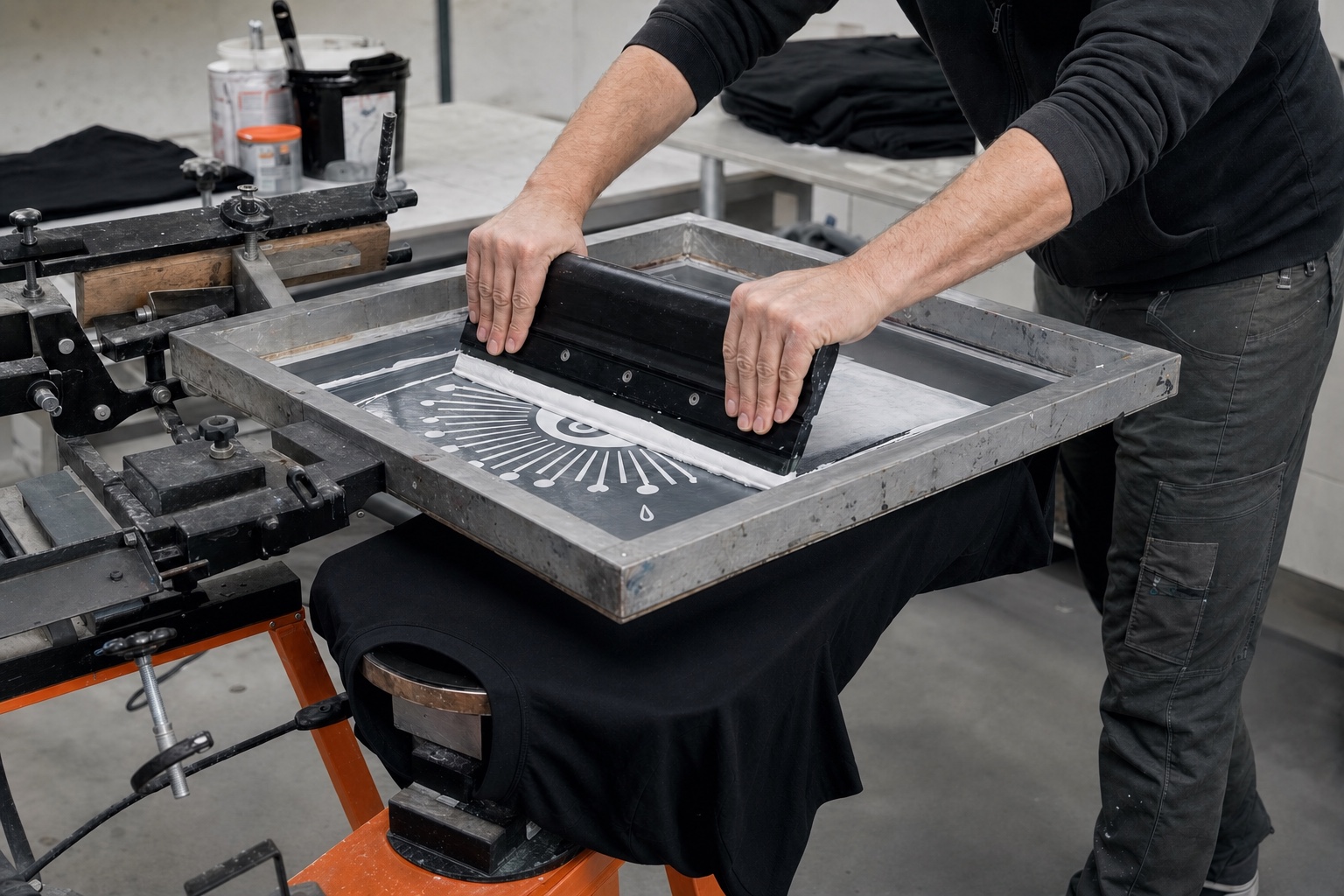
- Recurring company and club logos
- Medium and larger runs of one design
- Transfers produced in advance for later application
- Suitable workwear and team clothing
- Artwork with clearly defined colours
From colour separation to garment
Artwork, colours, quantity and garment should be agreed early because every colour needs a separate print stage.
- Separate artwork and confirm colours
- Prepare screens and print parameters
- Print colours in accurate registration
- Apply adhesive system and dry the transfer
- Heat press onto garments and inspect
Frequently asked questions
At what quantity does it pay off?
There is no fixed threshold. Colour count, artwork size, garment and repeat demand all affect the calculation.
Can transfers be produced in advance?
Yes, when their construction and storage are suitable. They can then be applied as garments are required.
Can many colours be printed?
Yes, although every additional colour needs its own screen and print pass.
Is it suitable for one-offs?
Usually not. Digital transfer methods tend to be more flexible for individual or changing designs.
Calculate screen-print transfers for your run
Send the artwork, colour count, garment and planned quantity. We will check whether the process is economical.