
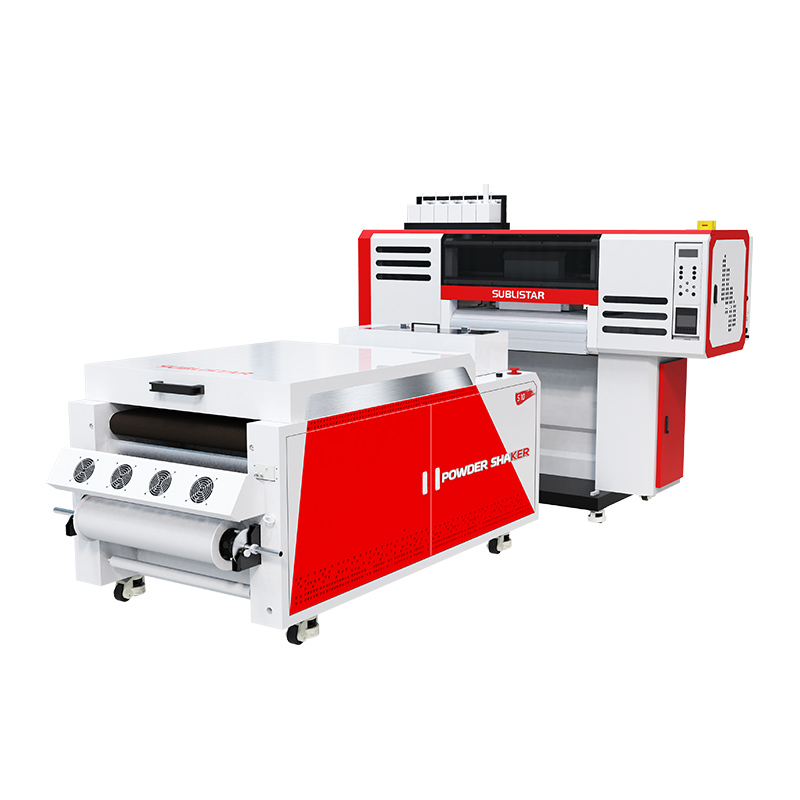
DTF stands for Direct to Film. CMYK and white inks are printed onto a carrier film, coated with hot-melt powder, cured and then heat pressed onto the garment.
How a DTF transfer is produced
Colour layers and a white backing are built on the film. Fine adhesive powder bonds with the ink during curing. The finished transfer is then pressed onto the textile.
Typical applications
DTF is versatile, but fabric, coating, stretch and expected wear still need to be checked.
- Multicolour logos and illustrations
- Suitable light and dark garments
- Corporate, club and promotional clothing
- Short to medium production runs
- Artwork with fine detail and several colours
Printing, adhesive and transfer
A reliable result depends on a coordinated ink build, powder coating, curing and pressing process.
- Check artwork and finished dimensions
- Print CMYK and white layers onto film
- Apply adhesive powder and cure it
- Press using suitable parameters
- Peel, post-press where required and inspect
Frequently asked questions
Can DTF be used on dark garments?
Yes. The white underbase supports colour on many suitable dark garments, but fabric compatibility still matters.
How durable is DTF?
Durability depends on fabric, production, design area, use and care. Correct pressing and care instructions are essential.
Is DTF stretchable?
A transfer can accommodate some stretch, but highly elastic or heavily stressed fabrics need specific testing.
Can DTF produce large designs?
Yes, although large solid areas may feel heavier and reduce breathability. A more open design is often more comfortable.
Plan the right DTF transfer for your garment
Send us the artwork, garment type, dimensions, quantity and use. We will check compatibility and execution.