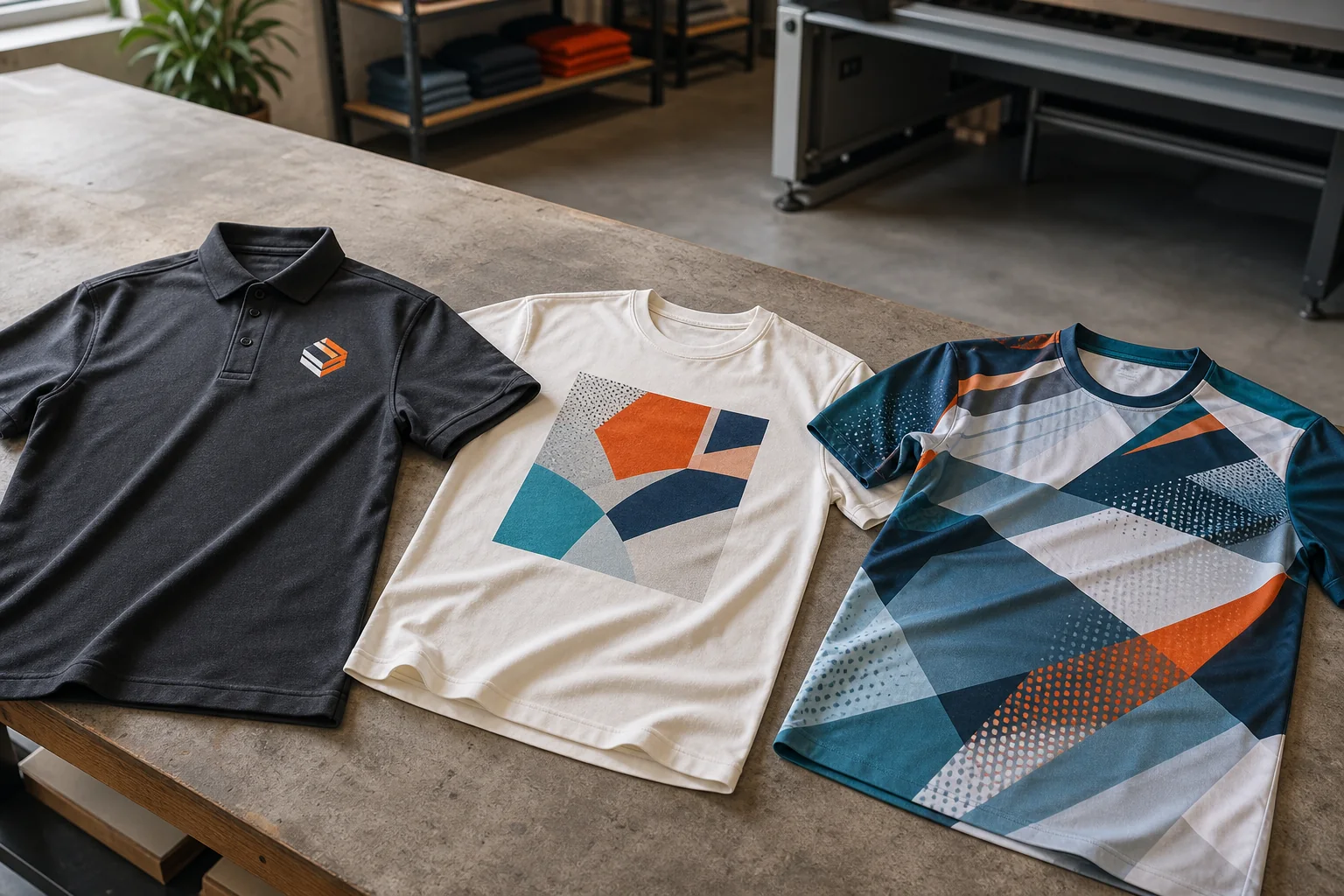
A company logo on a polo, player names on clubwear and a fully customised sports jersey require very different processes. There is no single method that is best in every situation. The garment, artwork, use and desired appearance determine the right choice.
Choose the result before choosing the process
Embroidery creates a premium textile surface. Printing reproduces fine detail, many colours and larger artwork more effectively. Sublimation is useful when suitable polyester needs to remain lightweight or carry a design across almost its entire surface.
Embroidery for clear logos and a premium appearance
Embroidery builds the artwork directly into the garment with thread. The result is slightly raised, looks valuable and withstands demanding use on suitable items. It works especially well for clear logos, names and short lettering.
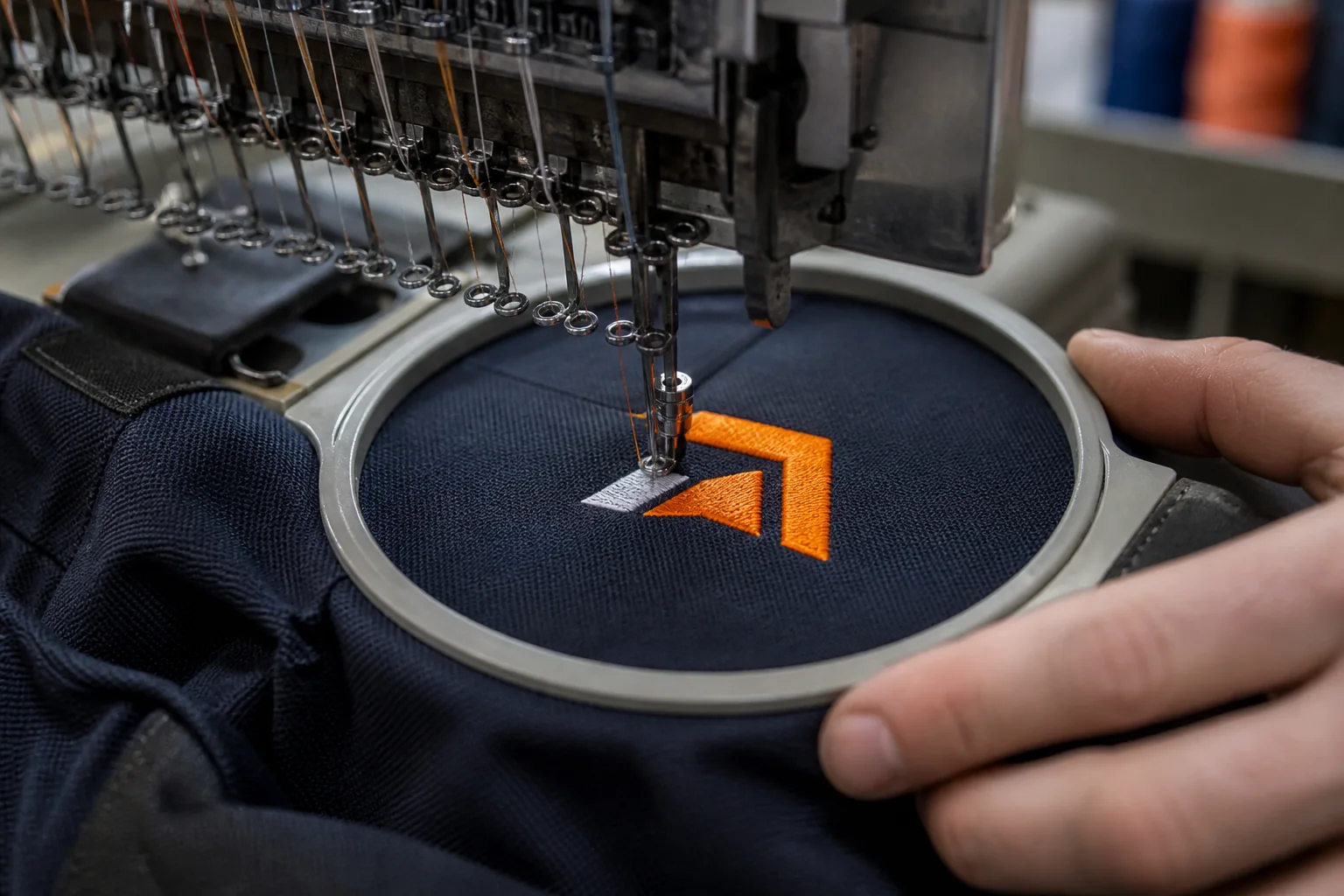
Very fine lines, small type, gradients and photographic artwork cannot be transferred unchanged. We create an embroidery file and adapt details, stitch direction, density and backing to the garment.
- Polo shirts, shirts, jackets, caps and robust workwear
- Clear company logos, club crests, names and short lettering
- Projects that need a premium textile appearance
- Garments that can be hooped and stabilised safely
Textile printing for colour, detail and flexible quantities
We select the printing process to match the artwork and material. DTF suits multicolour, detailed designs on many suitable garments. Flex works well for names, numbers and clear areas of colour. Screen-print transfers become attractive for repeated artwork and planned production runs.
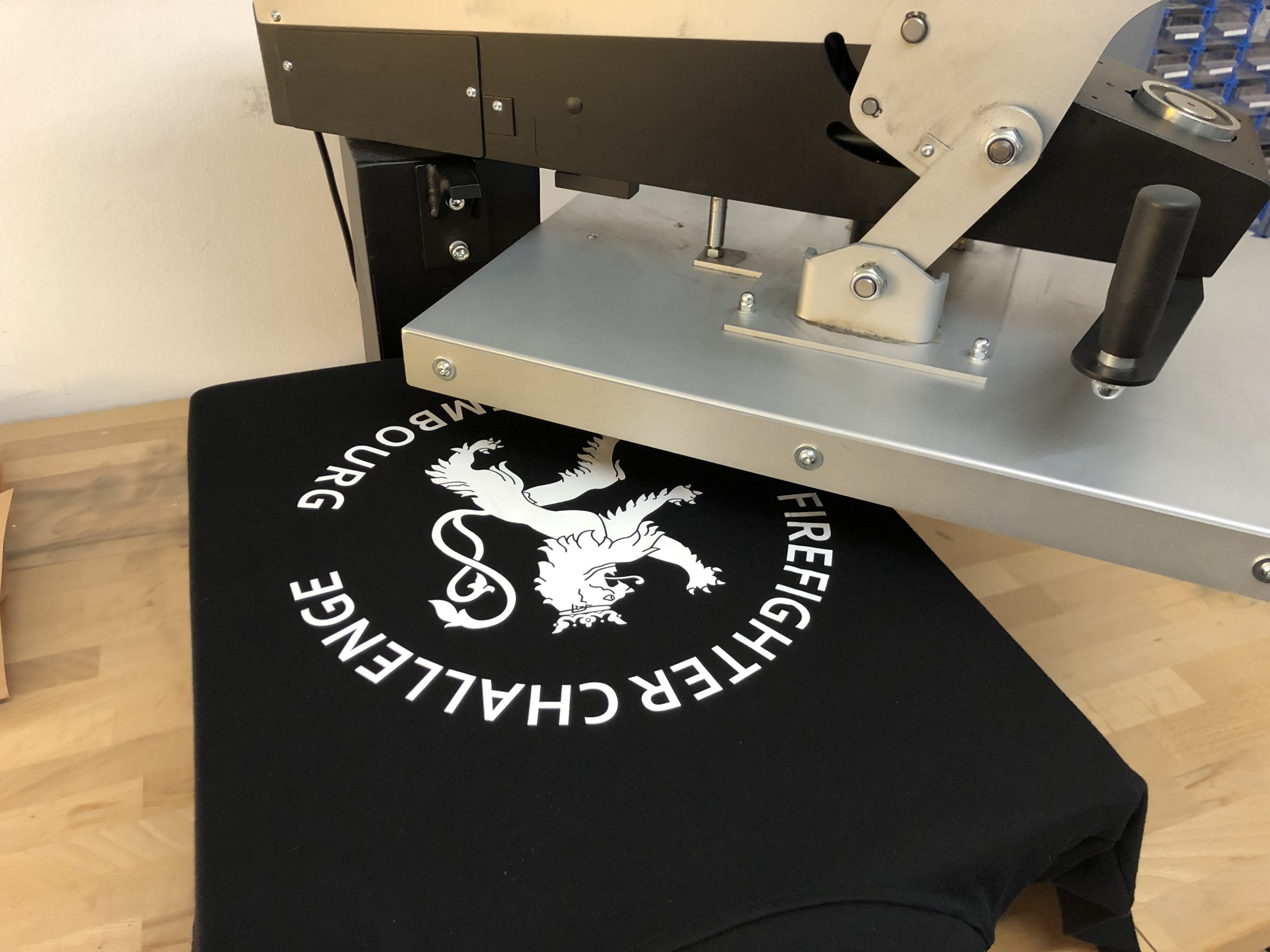
Large solid print areas can feel more noticeable and reduce breathability. Functional fabrics, coatings and highly elastic zones therefore need to be checked before production.
- DTF for colourful logos, illustrations and fine details
- Flex for names, numbers and clearly separated colours
- Digital flex for multicolour contour-cut artwork
- Screen-print transfers for repeated designs and planned runs
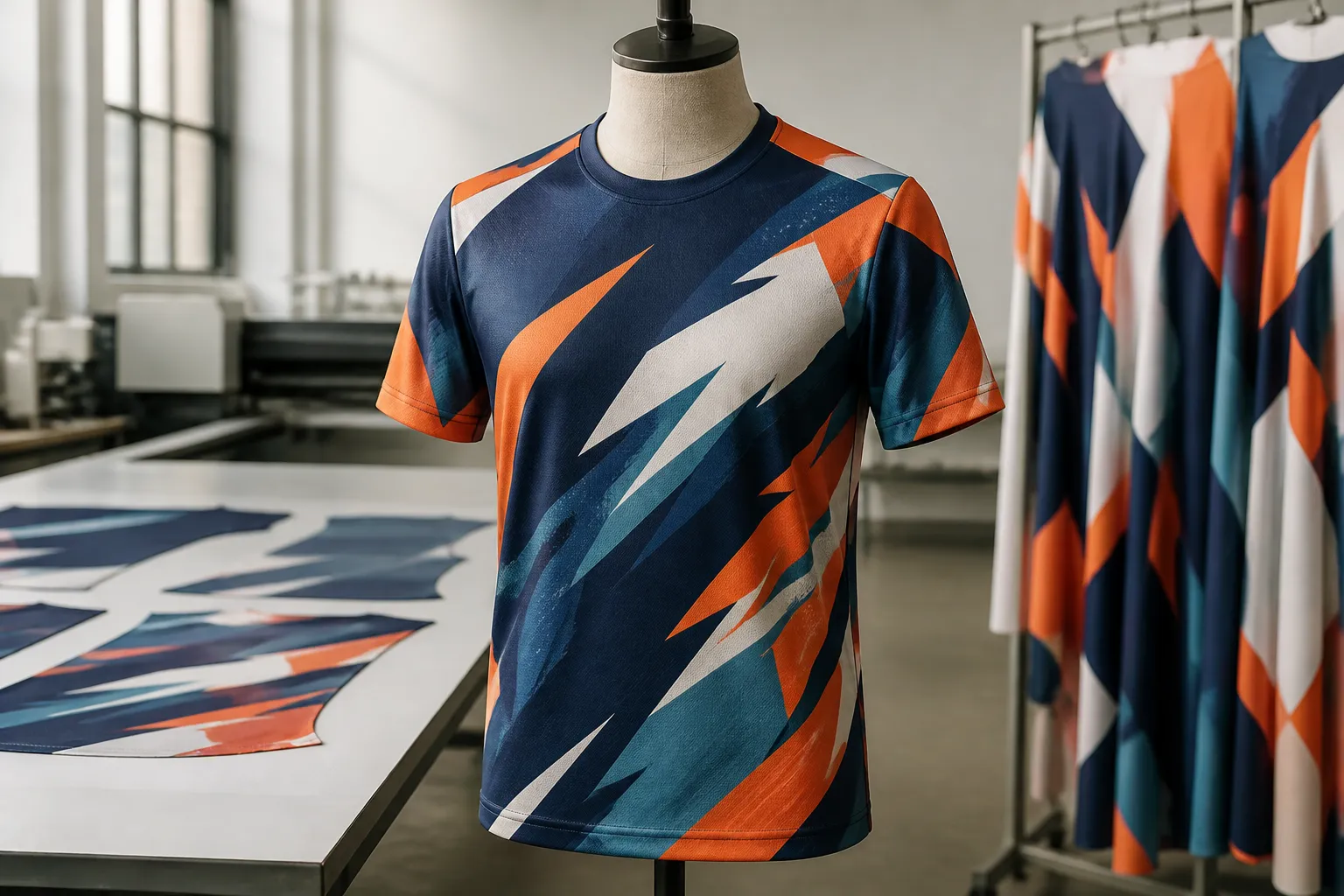
Sublimation can do more than print a motif onto a finished shirt
On suitable light-coloured polyester, the colour enters the fibre. There is no thick additional print layer to feel. The garment remains lightweight and flexible, which makes this especially useful for sportswear.
Your artwork is not production-ready yet? That can be solved
Not every project starts with a perfect vector file. We inspect the available artwork and prepare it for the selected process. The work involved depends on its size, clarity and the level of accuracy required.
- Remove backgrounds cleanly from artwork
- Redraw blurred or undersized logos where possible
- Simplify detail sensibly for small embroidery
- Adapt colours, outlines and line weights for print or embroidery
- Agree the print position and actual artwork dimensions
Five details usually lead to the right solution quickly
You do not need to write a long technical specification. A photo or product link, the artwork and a few details about use are often enough for an initial assessment.
- Which garment or fibre composition do you intend to use?
- How many items and which sizes are required?
- Where should the artwork sit and how large should it be?
- How will the garment be used and washed?
- When does the finished clothing need to be ready?
Frequently asked questions about printing and embroidery
Which lasts longer, textile printing or embroidery?
Embroidery is particularly robust on suitable garments. A correctly selected and produced print is also durable. Use, fabric, washing, drying and artwork area influence longevity more than a general number of wash cycles.
Which process works for small quantities?
DTF and flex can make sense for small quantities. Embroidery is also possible, but an embroidery file must be created once. We compare this setup work with the required quantity.
Can I supply my own garments?
This is often possible after inspection. We need the product reference, fibre composition and ideally a sample. Coatings, seams, linings and heat resistance may limit decoration.
What happens if my logo is not production-ready?
We can remove backgrounds, redraw artwork and adapt it for print or embroidery. We agree the scope and cost with you before carrying out more extensive graphic work.
Can a jersey really be printed all over?
Yes. In cut-and-sew production, the fabric panels are sublimated before they are sewn into the finished garment. This allows artwork across almost the entire surface.
Can printing and embroidery be combined?
Yes, provided the garment, positions and artwork division are suitable. A small embroidered chest logo can, for example, be combined with a larger back print.
Have your artwork and garment checked together
Send the artwork, garment, quantity, position and deadline. We recommend a suitable solution for projects from Konz, Trier, Luxembourg and the surrounding region.